
How to Choose the Right Dust Respirators: Matching FFP Ratings to Your Workspace
Is your dust mask actually providing the protection you need?Many workers pick respirators based on thickness or word-of-mouth,without considering that different dust concentrations and hazard types require different levels of protection. From woodworking and concrete prep to metal grinding, each requires different specifications. This guide breaks down FFP dust respirator ratings and key buying criteria so you can make an informed choice tailored to your specific work environment.
The Critical Role of Dust Respirators in Workplace Safety
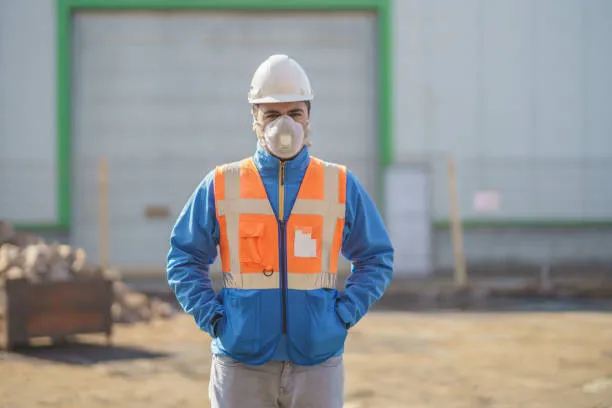
Some particles are invisible and odorless, yet present in worksites daily.Without a properly rated dust respirator, fine particles can penetrate deep into the respiratory tract and long-term exposure is linked to serious conditions like COPD, occupational lung cancer, and pneumoconiosis. Here are the most common environments where a dust respirator is essential:
-
Healthcare and Nursing Settings
Healthcare workers may be exposed to airborne particles, droplets and biological hazards. A certified respirator can help reduce inhalation risks in medical environments.
-
Industrial and Manufacturing Work
Welding, grinding, cutting and spraying can generate dust, fumes and harmful airborne particles. Choosing the right FFP dust respirator helps improve respiratory protection for workers.
-
Public Safety and Emergency Response
Fire scenes, chemical spills and disaster cleanup may involve complex airborne hazards. A suitable respirator helps provide added protection during emergency response tasks.
-
Laboratories and Research Facilities
Laboratory work may involve powdered chemicals, volatile substances or biological samples. Wearing the proper respirator helps protect operators while reducing contamination risks.
-
Daily and Special Situations
Air pollution, renovation dust, pollen seasons and long periods in enclosed transportation are also situations where a dust respirator may offer more comprehensive particle protection.
FFP, N95 and DS: Understanding Dust Respirator Rating Systems
So what separates a dust respirator from a regular surgical mask? The key difference is design intent. Flat surgical masks are built to block droplets; dust respirators are engineered specifically to filter microscopic airborne particulates, using multi-layer filtration materials that combine mechanical and electrostatic capture mechanisms to keep inhaled air cleaner.
Since certification standards vary by country, it's worth knowing the main frameworks before you buy. The U.S. uses NIOSH certification (N95, R95, etc.); the EU follows the EN 149 standard with FFP ratings; Japan uses the DS series for industrial dust masks. the goal is the same — to verify that a mask delivers adequate filtration at defined particle concentrations.
The rest of this guide focuses on the EU's EN 149 standard — the most widely referenced in industrial settings — and walks through the real-world differences between FFP1, FFP2, and FFP3.
Dust Respirator Ratings Explained: Decoding FFP1, FFP2, and FFP3
The FFP acronym is everywhere, but what do the numbers actually mean? It's not just a price tier — each level represents a distinct filtration capability and range of suitable applications. Under the EU EN 149 standard, here's how they compare:
FFP1, FFP2, FFP3 Comparison Table
|
Item |
FFP1 |
FFP2 |
FFP3 |
|
Filtration Efficiency |
≥ 80% |
≥ 94% |
≥ 99% |
|
Inward Leakage |
< 22% |
< 8% |
< 2% |
|
Protection Level |
Basic particle protection |
Medium particle protection |
High-level particle protection |
|
Suitable Particles |
General dust, lower-risk particles |
Fine dust, powdered chemicals, some bioaerosols |
Very fine particles, asbestos, ceramic dust |
|
Common Applications |
DIY, cleaning, low-dust work |
Construction, foundry, glass industry, pharmaceuticals, agriculture |
Asbestos handling, ceramic dust, high-risk fine-particle work |
|
Similar Standard |
— |
Similar to N95 |
Similar to N99 |
|
Wearing Requirement |
Basic fit check |
Good facial seal required |
Strict fit and proper use required |
|
Recommended Users |
Light dust work, DIY users |
General industrial workers |
High-risk particle exposure workers |
How to Choose the Right FFP Dust Respirator for Your Work Environment
Even on the same job site, a carpenter and a welder may need different respirator levels. Dust type, concentration and ventilation conditions all affect the level of protection required.Before choosing an FFP respirator, consider these three questions:
-
What kind of environment do you work in?
Indoor renovation, outdoor construction, and factory production lines differ significantly in dust concentration and air circulation. Enclosed spaces or high-dust environments require a more careful assessment of your protection needs.
-
What type of dust or hazardous substance are you exposed to?
Plaster, wood shavings, cement, metal powder, silica dust, and welding fumes all carry different risk profiles — one respirator rating can't cover every scenario. Know your hazard before choosing your mask.
-
How high is the exposure concentration?
Respirator selection should be based on actual measured concentrations in the work environment, occupational exposure limits (OELs), and task-specific demands. Higher concentrations generally require a higher FFP rating.
Looking for a Reliable FFP Respirator? AERO PRO is the Definitive Choice
Certification sets the baseline, but manufacturing capability, quality control processes, and real-world performance matter just as much. AERO PRO is a Taiwan-based professional manufacturer of disposable respirators — managing everything from electrostatic filter media development to final product inspection in accordance with international standards.
✔️Multiple International Certifications
AERO PRO FFP respirators comply with EN 149:2001 + A1:2009 and hold both ISO 13485 and ISO 9001 certifications, making them suitable for medical and industrial applications. Certification demonstrates that every mask has been rigorously validated at the design, production, and testing stages.
✔️In-House Electrostatic Filter Media
Using self-developed non-woven electrostatic filtration materials, AERO PRO maximizes filtration efficiency while minimizing breathing resistance — so extended wear stays comfortable. In-house production means end-to-end quality control, independent of external supply chains.
✔️Precision Testing Equipment
Every production batch is tested using a TSI 8130A automated filter tester to verify filtration efficiency and breathing resistance against NIOSH and EN 149 standards. Equipment is regularly calibrated by accredited bodies per ISO standards, ensuring measurement reliability and consistency.
✔️Fit Testing for Real-World Protection
AERO PRO uses a TSI 8048 PortaCount for face seal testing — compliant with OSHA and ISO standards. No matter how high the filtration efficiency, particles will bypass a poorly fitting mask through edge gaps. Fit testing is the step that closes that gap.
✔️Suitable for a Wide Range of Applications
From industrial manufacturing and construction to laboratories and emergency response, the AERO PRO FFP lineup covers the full spectrum of work environments — whether for extended daily production line use or short-duration, high-hazard operations.
✔️Custom Solutions for Enterprise Procurement
AERO PRO offers flexible customization options for business customers, including specification adjustments and bulk order arrangements. From initial inquiry to final delivery, a dedicated professional team supports every stage of the procurement process.
Choosing the right dust respirator isn't just about picking a rating.it's about matching the mask to your specific dust type, exposure duration, and worksite conditions. If you're sourcing FFP respirators for your organization, AERO PRO can help assess the right specification for your environment and support your procurement needs. From everyday production lines to high-dust operations, trust your respiratory protection to AERO PRO.